

Preservation of the Environment
The Tadano Group is working towards improving the global environment from various perspectives, such as initiatives to address climate change, CO2 emissions reduction, industrial waste reduction, conservation of forests and seas, and biodiversity protection. Under the Tadano Group Environmental Policy, “We serve society by promoting cooperation between people, machinery, and the environment,” we are committed to each employee caring for the environment, to the development of green products, and to the provision of green services and environmentally friendly business activities.
For Initiatives to Address Climate Change, please click here.
Long-Term Environmental Targets
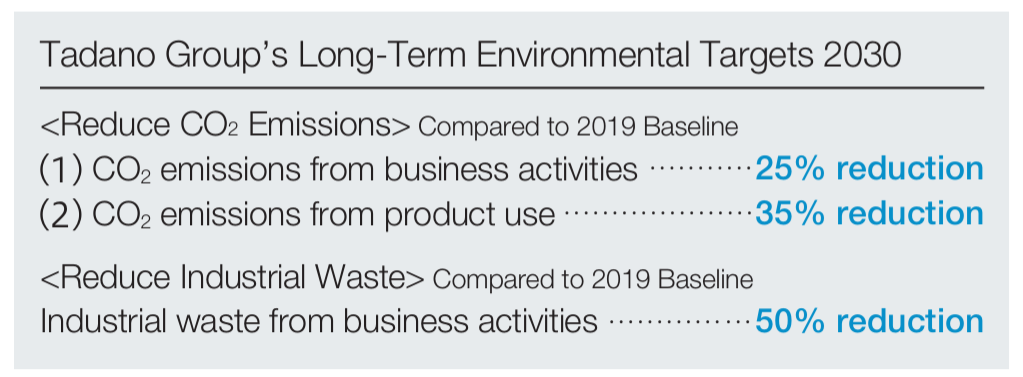
We set long-term environmental targets for 2030 compared to the 2019 baseline of a 25% reduction in CO2 emissions from business activities, a 35% reduction in CO2 emissions from product use, and a 50% reduction in industrial waste emissions from business activities.
EffOrt to Reduce CO2 Emissions from Business Activities
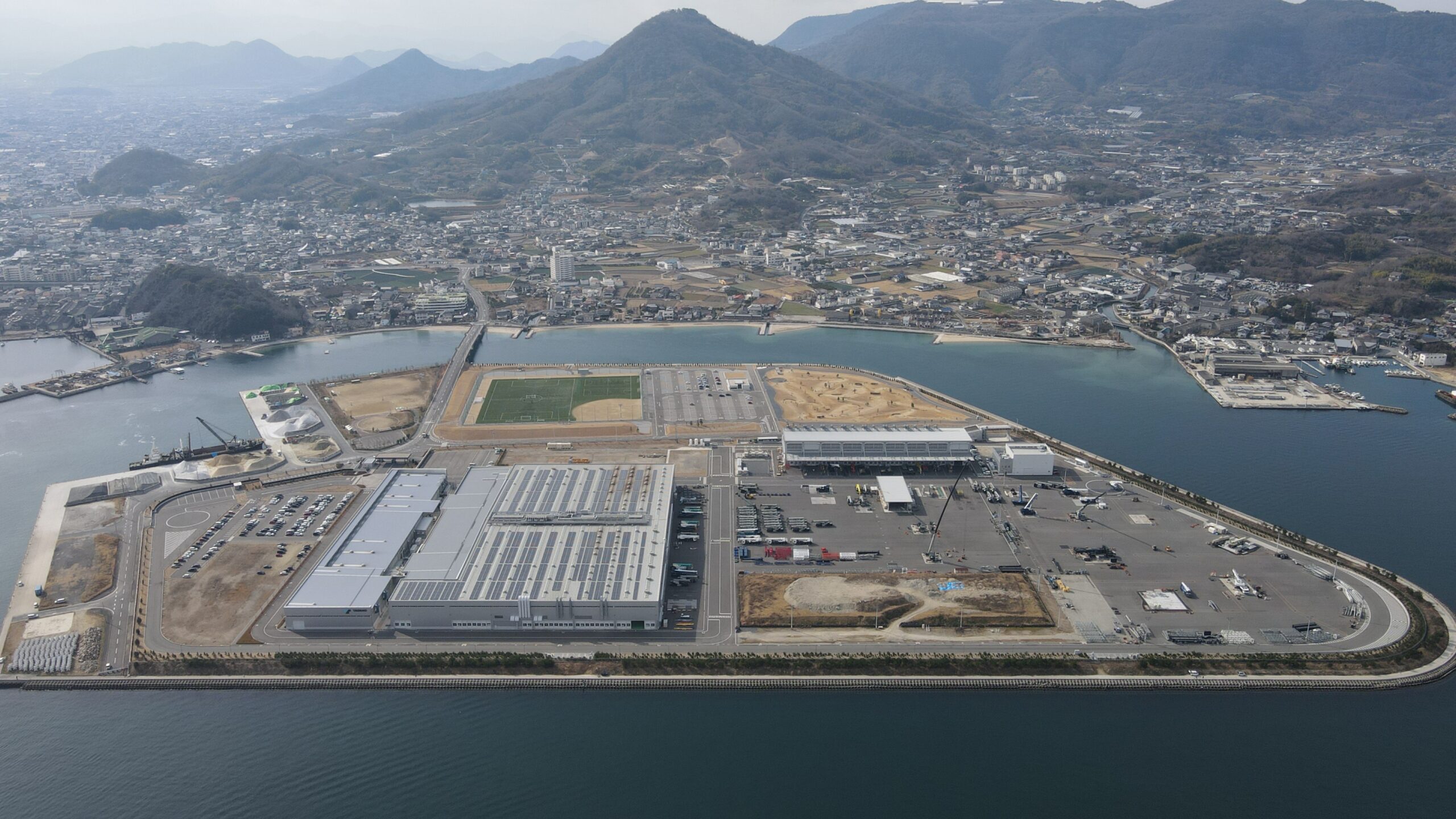
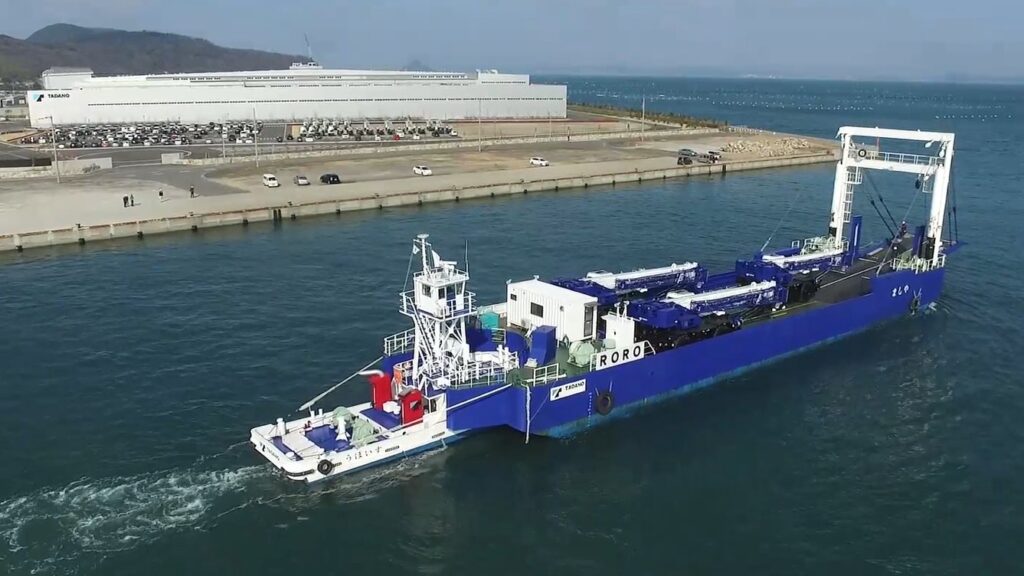
The problem of climate change is a critical issue which cannot be resolved unless the entire world works together. The Tadano Group is also carrying out programs aimed at contributing to preserving the global environment and creating a sustainable society. In the Shido Plant, we installed solar panels with a maximum output of 260kW in 2008, and added another 1,593kW which began operation in 2025. From the perspectives of both production and energy, we are working on reorganization and efficiency improvement. In addition, at the Kozai Plant, constructed under the concept of “Next Generation Smart Plant: With the Collaboration of People and Machinery, Connecting to the Next Generation of Smart Manufacturing,” we adopted an energy management system, which can monitor energy consumption in real-time. We also installed solar panels with a maximum output of 1,182kW in 2021. At both plants, we are transporting products using barge vessels that feature high energy efficiency and low CO2 emissions, and are also actively implementing a modal shift. In January 2023, we also installed solar panels with a maximum output of 606kW at the Tadotsu Plant. In 2023, we launched a new program to purchase surplus solar power generated at the group company employees’ houses in Kagawa Prefecture through an electric power company and utilize it at the Shido Plant. As of spring 2025, 46 households are in the program.
Outside Japan, Tadano Demag GmbH, one of our German group companies, installed 675 square meters of solar panels on the roofs of its Dinglerstraße Office buildings in August 2023. The solar power generating system generates about 70,000 kWh of electricity annually, capable of generating enough power to supply electricity for the company’s two office buildings. We are also working on a new initiative to reduce CO2 emissions from transportation by reviewing the delivery method of product catalogs and building a direct delivery system from the Takamatsu Head Office and Tokyo Office.
We are working to reduce environmental impacts at our other business sites inside and outside Japan as well, including by installing solar panels, conserving air conditioning and lighting power, and changing company-owned vehicles to electric and hybrid models. As a member of society, we will continue to enhance our programs aimed at improving the global environment and achieving a decarbonized society.
Changes in CO2 emissions (Scope 1 and Scope 2)
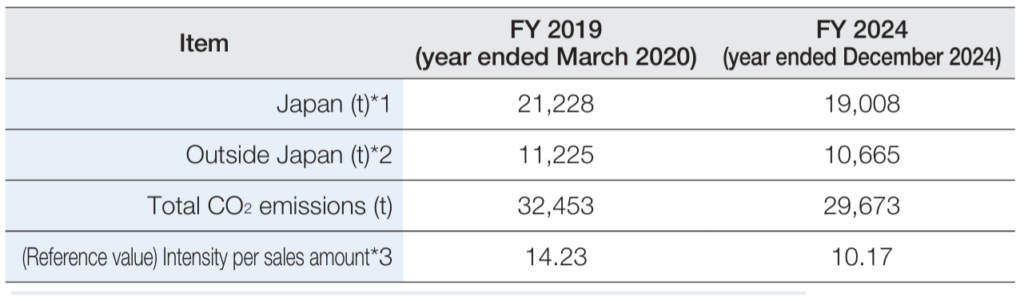
*1: Applicable to all business locations in Japan (including group companies and plants, etc.)
*2: Applicable to production locations outside Japan. The scope of calculation will be expanded to other group companies outside Japan in the future.
*3: Intensity with the Tadano Group sales amount as the denominator is indicated (CO2: ton/sales: 100 million yen).
*4 Figures for the base year FY 2019 and the subsequent years are recalculated every year to reflect changes in the scope of consolidation due to business combinations etc.
Effort to Reduce CO2 Emissions from Product Use
Emissions generated during product operations account for a large portion of the CO2 emissions in the life cycle of construction machinery. Against such background, reducing CO2 emissions from our products has become a major issue for protecting the future of our planet.
Among our existing products, the CREVO G5 Series of rough terrain crane includes a new-generation engine designed to protect the environment, “automatic acceleration” that reduces wasteful engine speed, and “automatic pump stop” that stops the power-take-off pump when the crane is not being operated.
In addition, the electro-hydraulic system “e-PACK,” which allows the crane to be operated without starting the engine has been released in Japan as well as Europe. In this way, our products have supported efficient and environmentally friendly operations through the reduction of CO2 emissions, the reduction of fuel consumption, and low-noise operations.
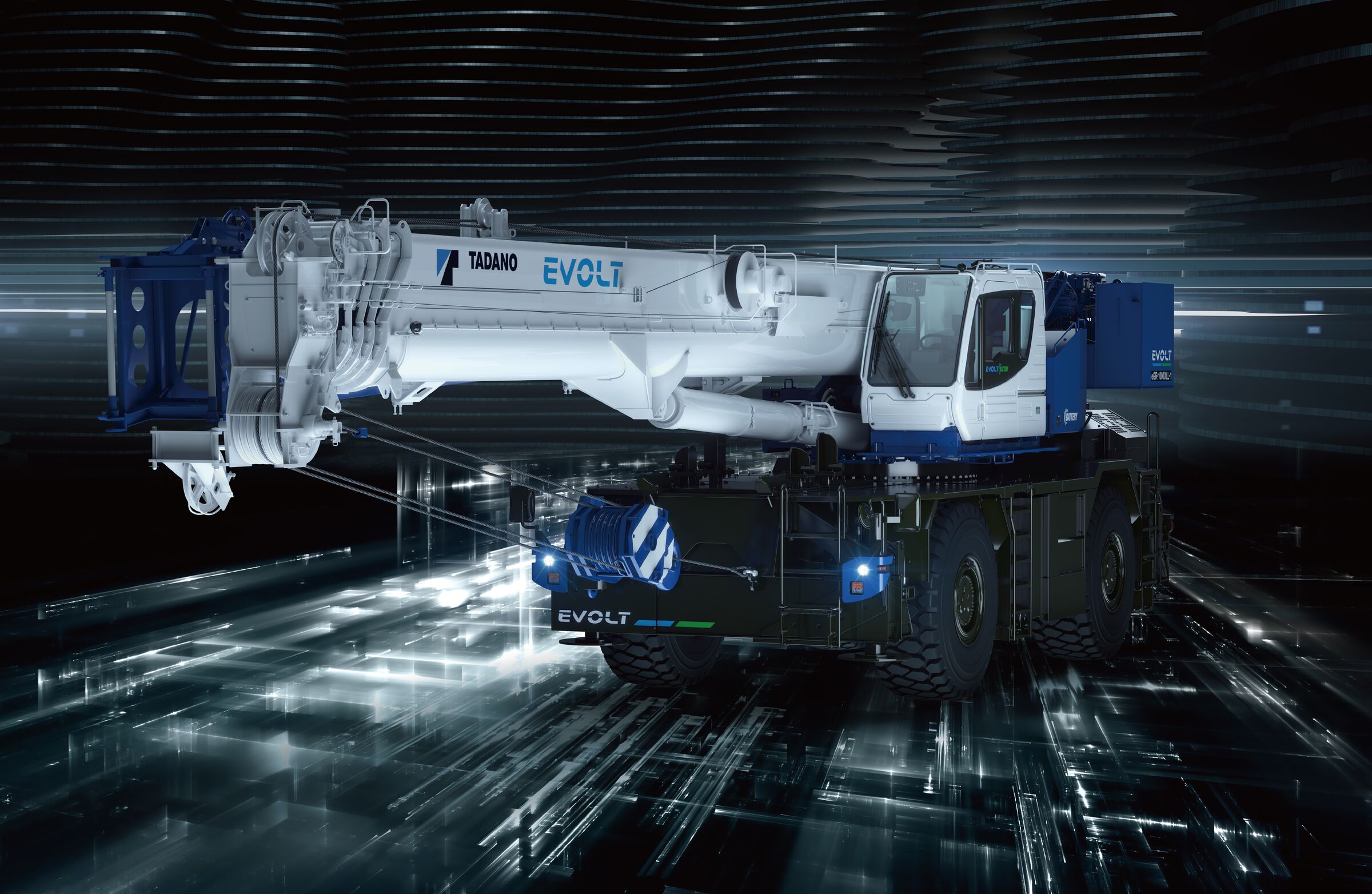
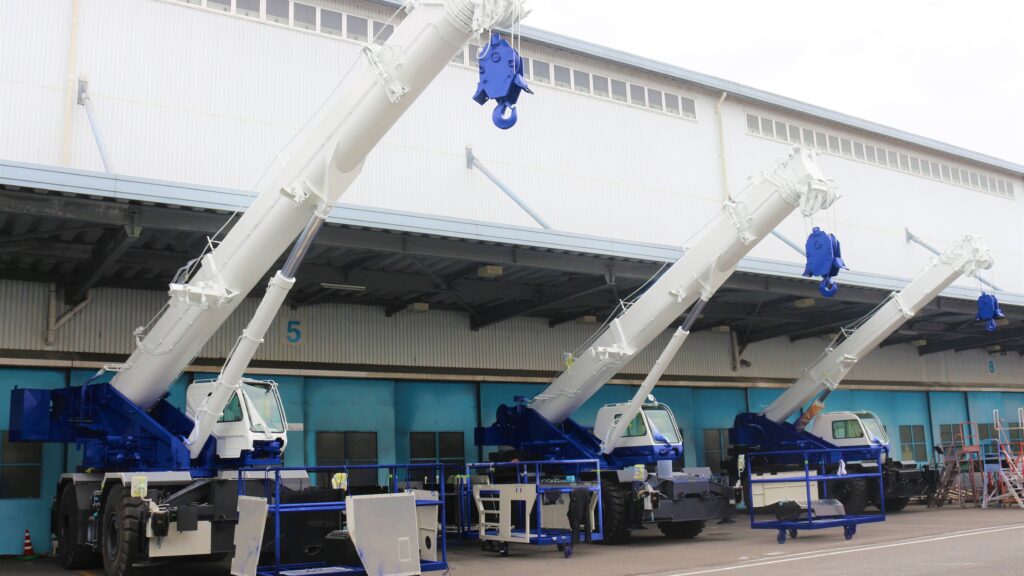
In December 2023, we launched the world’s first electric rough terrain crane (EVOLT eGR-250N) in Japan, and in November 2024, we launched the second electric model EVOLT eGR1000XLL-1 for the US and Canadian markets. These are innovative products that can travel and perform crane operations using electrical power with no CO2 emissions from the products.
In December, we also announced the development of the wired electric CC 88.16001 (extra-large crawler crane).
In addition, among other products of the Tadano Group, extra-large mobile cranes and aerial work platforms for high elevations are expected to play a big role in the construction of renewable energy power plants such as wind power stations, which are anticipated to increase due to Green Transformation in the future. We are also working to develop new products specifically designed for the maintenance of wind power generation facilities. We will continue to accelerate the development of products that contribute to decarbonization and the preservation of the environment.
Eddort to Reduce Industrial Waste Emmisions from Business Activities
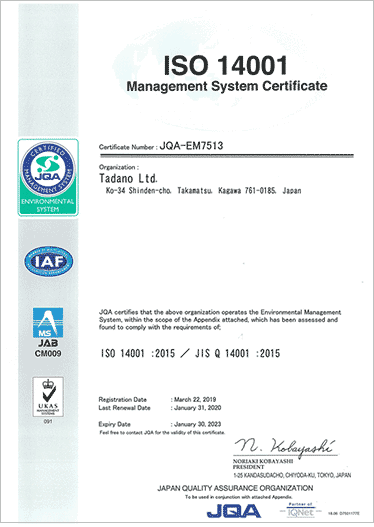
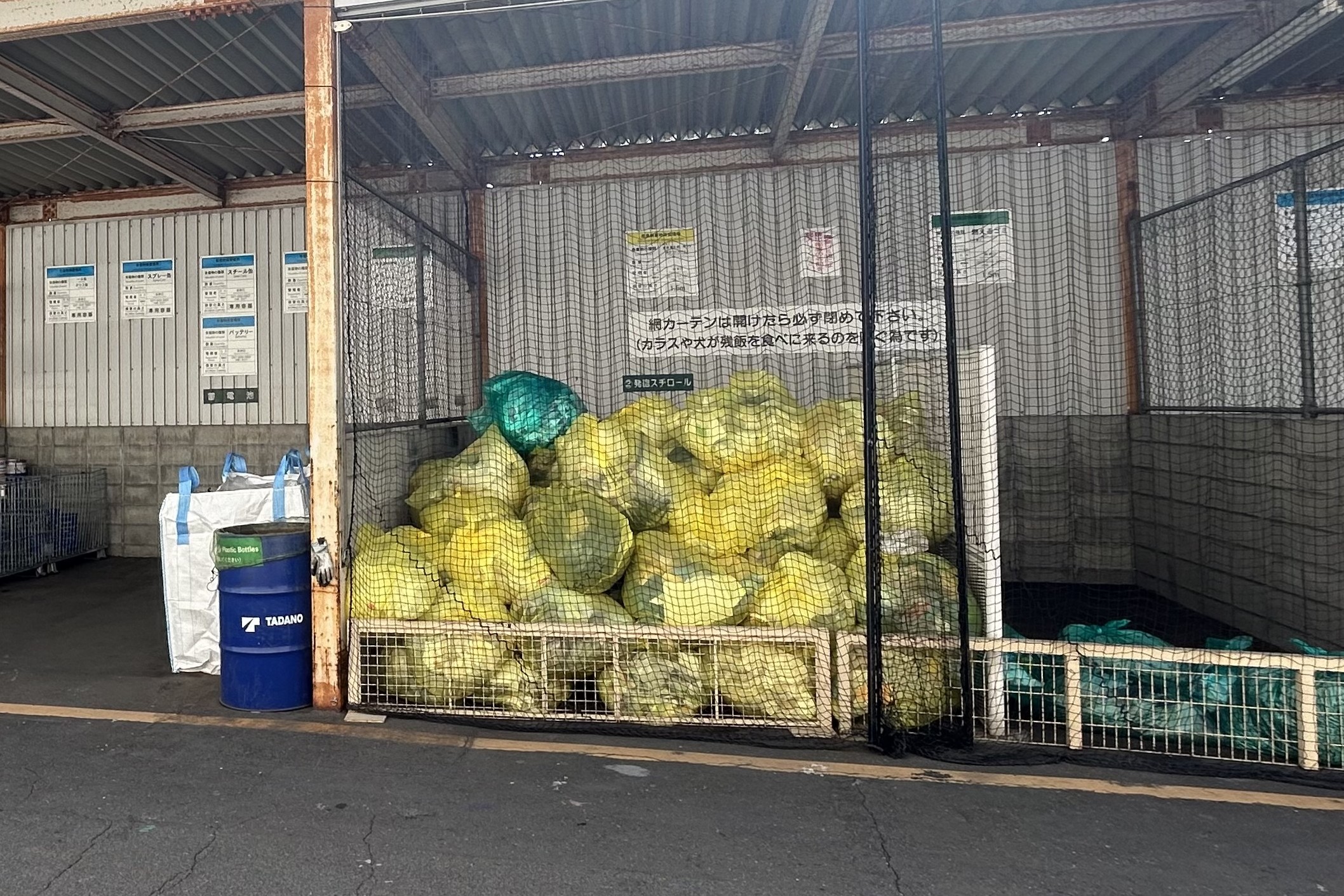
To realize a recycling-oriented society, the Japanese government is promoting the reduction, reuse, and recycling of waste. Since acquiring ISO 14001 environmental management system certification in 2008, the Tadano Group has also been working to reduce industrial waste emissions from its business activities. Approximately 90% of industrial waste in the Tadano Group is generated at production sites. We are working to reduce industrial waste by means including complete sorting of waste, recycling waste to create valuable materials, reducing the use of plastic in part packaging, and making effective use of surplus parts.
In an effort to convert waste into valuable resources, we recycle waste oil into recycled heavy oil. In 2024, we established a system to recycle wooden wire drums and plastic bottles emitted from our sites into valuable resources. These efforts have steadily reduced our waste emissions.
We have also revised our rules for sorting waste, and started trading in vinyl plastics as valuable materials to reduce plastic waste to respond to the problem of plastic waste which has become a global issue in recent years.
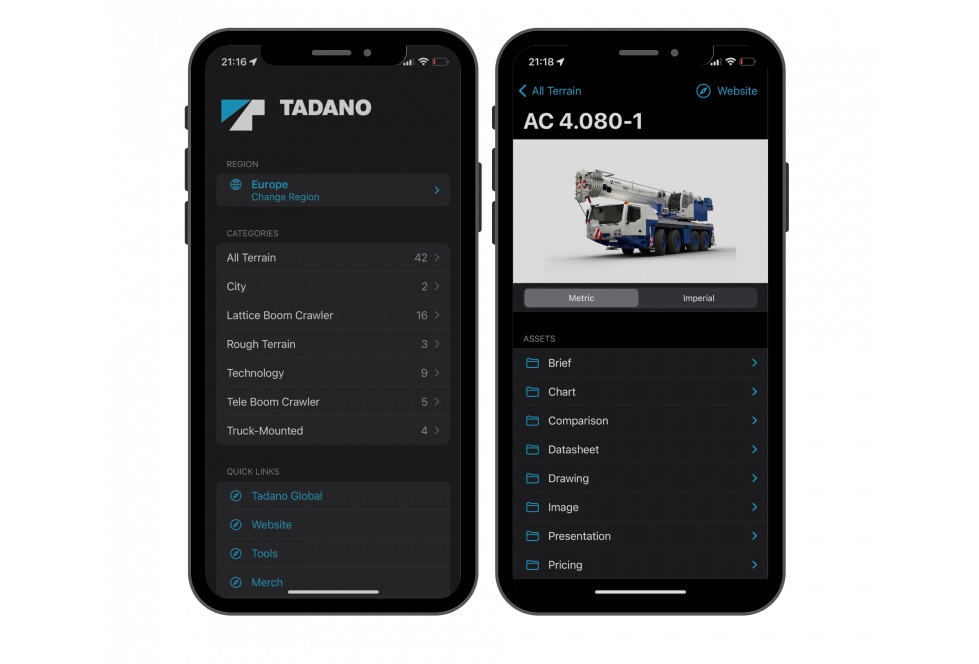
s part of our efforts to recycle industrial waste generated from our business activities, we also encourage the reuse and recycling of returnable containers used for delivering parts. Additionally, we developed TadanoPro, an app for the web and iOS to reduce the need for printed materials such as product brochures, datasheets, and photos. By providing all information digitally, we are minimizing paper use to conserve forests and reduce waste. This environmentally friendly tool not only increases efficiency for customer access, but also demonstrates Tadano’s commitment to sustainable practices in the digital age.
Changes in industrial waste emissions
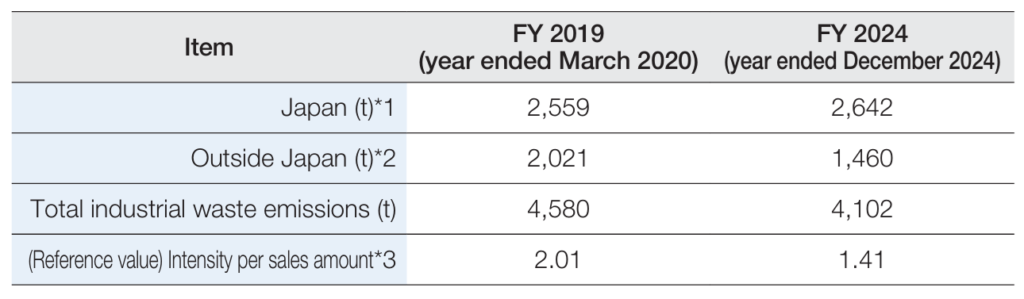
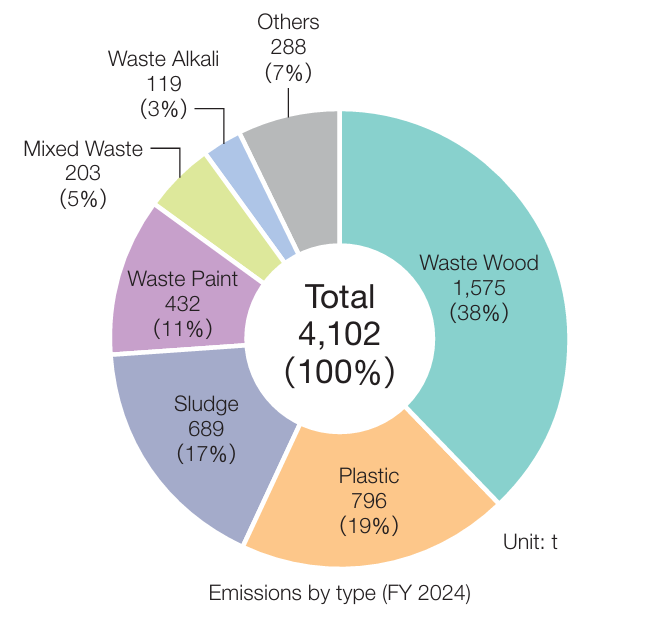
*1: Applicable to all business locations in Japan (including group companies and plants, etc.)
*2: Applicable to production locations outside Japan (TDG and TFG). The scope of calculation will be expanded to other group companies outside Japan in the future.
*3: Intensity with the Tadano Group sales amount as the denominator is indicated (industrial waste: ton/sales: 100 million yen).
*4 Figures for the base year FY 2019 and the subsequent years are recalculated every year to reflect changes in the scope of consolidation due to business combinations etc.
Contribution to Wind Power
There are new offshore wind power projects underway in Japan to realize a decarbonized society.
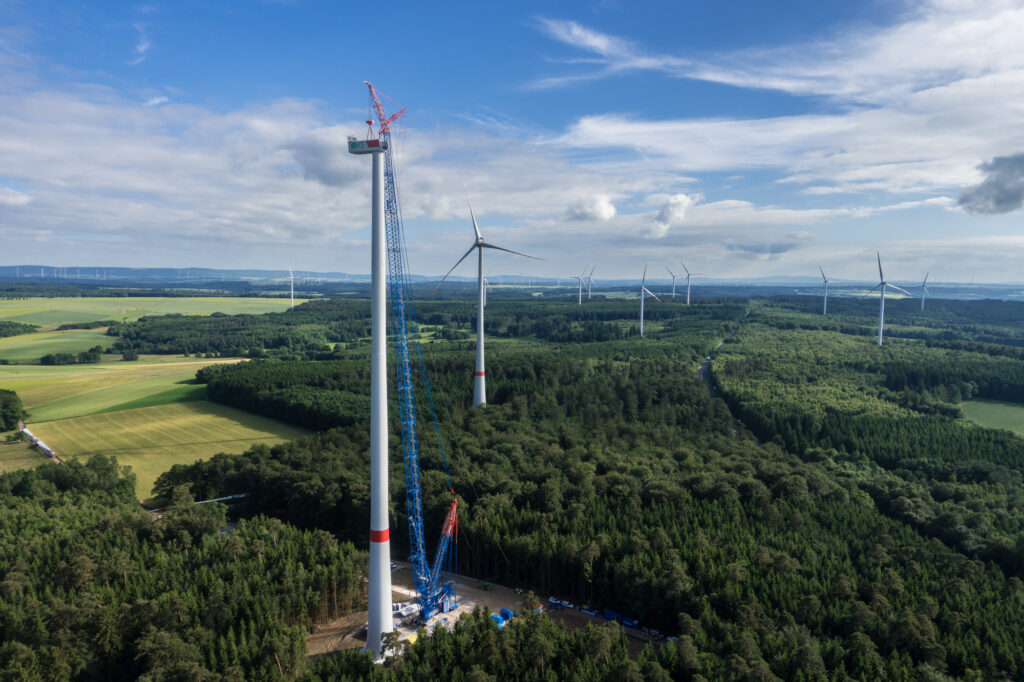
It is expected that wind turbine components transported by cargo ships and trailer trucks are first transported to port facilities, pre-assembled, and then loaded onto transport ships. CC 88.3200-1 TWIN, the world’s largest lattice boom crawler crane (3,200-ton lifting capacity), was added to the Tadano Group’s product lineup as a result of the 2019 acquisition of the Demag Mobile Cranes business. This machine plays an important role in the pre-assembly of increasingly large wind turbines and supports safe and high-quality construction work.
With the know-how we have acquired in Germany, which is a leading country in wind power generation, we strive for making further contribution to this field by demonstrating the unique advantages of the Tadano Group in having development and production locations in both Japan and Germany. Furthermore, we provide various solutions, including a davit crane that performs loading operations for repair and maintenance of wind turbines, and AT-530CG, an aerial work platform with a maximum platform height of 52.8 meters, which is the highest among Japanese models.
The Tadano Group supports the construction and maintenance sites for wind power generation, whether onshore or offshore, and plays a role in the creation of clean energy that helps realize a decarbonized society.
Conservation of Biodiversity and Forests
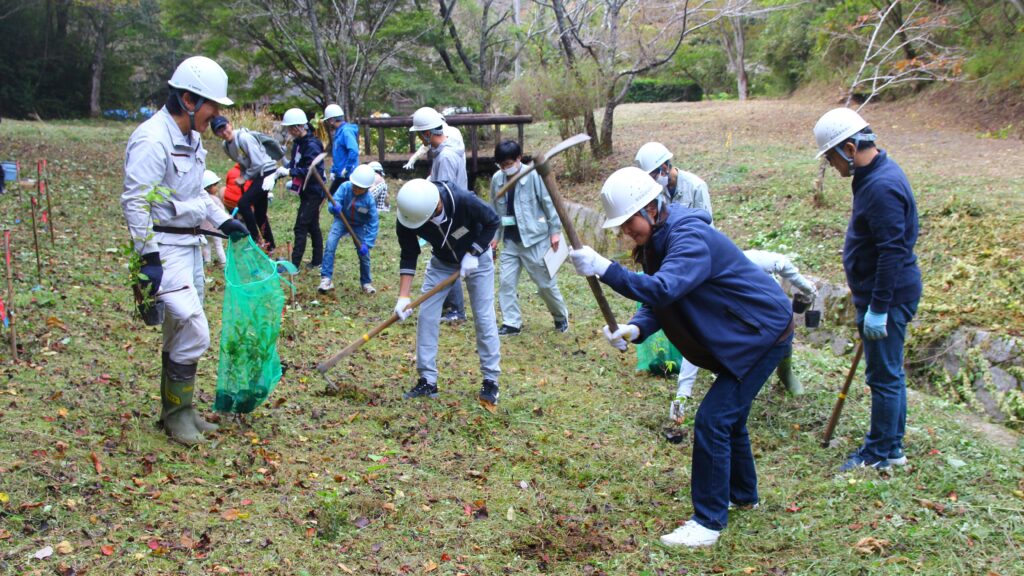
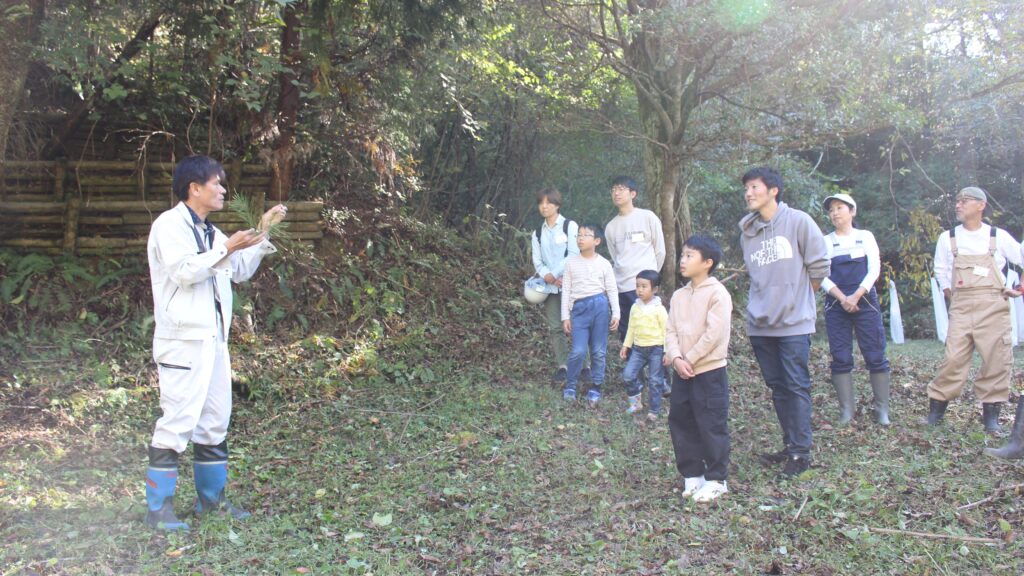
To preserve the blessings of nature for future generations, we engage in activities that help conserve biodiversity and forests. Under the “Forest Matching Promotion Project” organized by Kagawa Prefecture, we have been carrying out forestation activities since 2020 by designating a part of the forest owned by Sanuki City as “Tadano Forest of Learning.” Volunteers from the Tadano Group take part in these activities to maintain a “place for learning about the environment” by regularly weeding and planting trees, and to learn about flora and insects by observing the natural habitat in which various species are living. The forestation activities also create opportunities to socialize among employees from various departments and their families.
In October 2024, we held the 5th forestation event at “Tadano Forest of Learning” in which participants worked on tree planting and other forest maintenance activities. After planting trees, participants joined a lecture by an expert from a local organization on how leaves grow on planted saplings and the structures of seeds. We promote forestation activities to help our employees understand the importance of environmental conservation through forest maintenance and tree planting, and to create opportunities of interaction.
Conservation of Water Resources and Seas
In our efforts to protect the richness of the sea, we believe it is important to work for the conservation of water resources.
Specifically, the coating of our products uses organic solvents, which poses a risk of environmental pollution. At our plants in Japan, we use wet type coating booths with control procedures established not to discharge wastewater from the booths into public waterways. This reflects our commitment to comply with relevant laws and regulations, such as the “Air Pollution Control Act,” the “Soil Contamination Countermeasures Act,” and the “Water Pollution Prevention Act.”
We also comply with related regulations, including the “Industrial Safety and Health Act,” for the safety and health management of workers. To address the risk of rainwater discharge, we carry out drainage management by installing oil water separators and conducting regular inspections. Learning about the environment close relationship with the sea in the course of its business activities. In recent years, marine debris has continued to increase, causing a variety of adverse effects on the environment. We have been organizing beach cleaning initiatives since 2021, hoping that participating in the cleanup will help us know more about and get more interested in the marine debris issue. During the first to third clean-ups, we picked up trash on the coast and surveyed marine debris. For the survey, we used the ICC (International Coastal Cleanup) data sheet to record data on the types and volumes of trash collected. Through these activities, we will encourage our employees to learn about and participate in the protection of the richness of the sea.
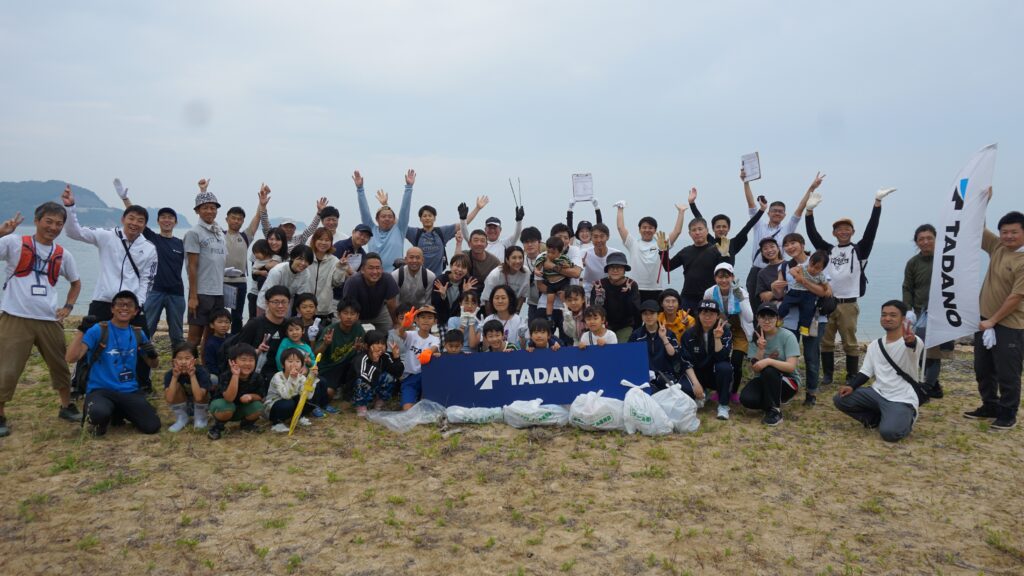
We also engage in beach cleaning activities as part of our efforts for marine conservation. Most of our plants in Kagawa Prefecture are located overlooking the Seto Inland Sea. Products are also transported by sea, and the Tadano Group has developed a close relationship with the sea in the course of its business activities. In recent years, marine debris has continued to increase, causing a variety of adverse effects on the environment. We have been organizing beach cleaning initiatives since 2021, hoping that participating in the cleanup will help us know more about and get more interested in the marine debris issue. During the first to third clean-ups, we picked up trash on the coast and surveyed marine debris. For the survey, we used the ICC (International Coastal Cleanup) data sheet to record data on the types and volumes of trash collected. Through these activities, we will encourage our employees to learn about and participate in the protection of the richness of the sea.
Sustainability
Under our Corporate Philosophy of “Creation, Contribution, and Cooperation,” the Tadano Group strives to contribute to the preservation of the environment and the realization of a sustainable society through maximizing value to our stakeholders and engaging in sustainable business activities. We aim to pursue further excellence for the world and the future.
The Mid Term Management Plan (24-26) formulated in 2024 sets “Advancing decarbonization” as one of the basic strategies, and identifies addressing sustainability issues and management in consideration of capital cost and stock price as initiatives for sustainable growth.